
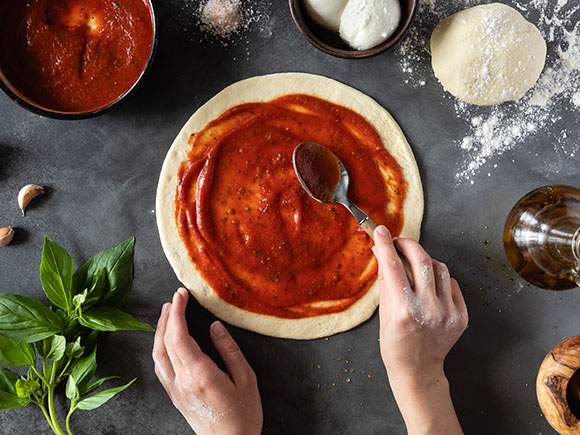
What’s the secret behind a pizza that customers keep coming back for? More often than not, it starts with the sauce. While cheese, crust, and toppings matter, the base layer ties everything together. Many restaurants rely on classic pizza sauce for its rich flavour and timeless appeal. But here’s the catch: even the best sauce can go wrong when used incorrectly. From over-seasoning to poor storage, small missteps can quickly turn a great pizza into a forgettable one. In this guide, we’ll explore the top 10 mistakes restaurants make with classic pizza sauce—and how to avoid them.
1. Using Sauce Straight from the Can
Restaurants often take a ready-to-use sauce and spread it directly on the dough. The problem? Classic pizza sauce straight from the can can taste flat, metallic, or overly acidic.
Solution: Always taste and balance it with fresh herbs, a touch of olive oil, or even a pinch of sugar to round out acidity before using.
2. Overloading the Pizza with Sauce
A common mistake is thinking “more sauce = more flavour.” Too much classic pizza sauce leads to soggy crusts and unbalanced bites.
Solution: Use a ladle to portion sauce consistently. A thin, even layer keeps the crust crisp while letting cheese and toppings shine.
3. Skipping Sauce Temperature Control
Cold sauce spread on raw dough can lower oven temperatures in spots, preventing even cooking.
Solution: Keep the sauce at room temperature before applying. This helps the pizza bake evenly and avoids doughy spots.
4. Ignoring Sauce-to-Crust Pairing
Not every crust matches every sauce. A thick, chewy crust may need a bold and spiced version, while thin crusts pair better with lighter spreads.
Solution: Match sauce intensity to crust style. Test different pairings to find the balance your customers love.
5. Using Low-Quality Tomatoes
The foundation of the best pizza sauce lies in tomatoes. Many kitchens cut costs with generic or low-grade canned varieties.
Solution: Invest in high-quality tomatoes or tomato paste. Authentic Italian varieties, like San Marzano, bring out the natural sweetness and depth that make pizzas memorable.
6. Skipping Taste Tests Throughout the Day
Classic pizza sauce flavour can shift after sitting for hours—becoming more acidic or bland as it rests.
Solution: Train your staff to taste test batches during prep and service. A quick adjustment with herbs or seasoning can save dozens of pizzas from mediocrity.
7. Failing to Train Staff on Consistency
Even the best pizza sauce loses its charm if every cook applies it differently—too much on one pie, barely any on another.
Solution: Standardise the process. Use portion cups or ladles, and make training part of onboarding so every pizza meets the same standard.
8. Overcomplicating the Flavour
Classic pizza sauce should enhance, not overpower. Some restaurants load it with extra garlic, onions, or chilli flakes, turning the sauce into the star instead of the supporting actor.
Solution: Keep it simple. A balanced sauce allows the cheese, toppings, and crust to harmonise naturally.
9. Improper Storage Practices
Leaving sauce uncovered or stored too long leads to bacterial growth, off-flavours, or separation.
Solution: Store in airtight containers, refrigerate promptly, and label with dates. Stick to food safety guidelines—never stretch sauce beyond its shelf life.
10. Forgetting Customer Preferences
Every market has unique tastes. A one-size-fits-all sauce approach can miss the mark with your local audience.
Solution: Gather customer feedback. Some may prefer sweeter notes, others spicier. Use your classic pizza sauce as a base, but be ready to offer variations.
Key Takeaways
Classic pizza sauce is more than just a topping—it’s the heart of the pizza. But even restaurants with great intentions can slip up. The most common mistakes include:
- Using sauce straight from the can without balancing flavours
- Overloading pizzas, making them soggy
- Neglecting storage, staff training, or customer preferences
Avoiding these pitfalls doesn’t require major investments—it requires attention to detail. Pair high-quality tomatoes with thoughtful preparation, keep portions consistent, and listen to what your customers want.
At the end of the day, the best pizza sauce is one that complements every element of the pie while leaving diners satisfied and eager to return. Restaurants that respect the role of their sauce will always have an edge over those who overlook it.